The two flows every beverage alcohol company must manage
Every beverage alcohol company manages two flows simultaneously. Physical product moves forward through the supply chain, from farm to customer. At the same time, planning information moves in both directions, driven by demand and informed by supply. That information translates future demand into the inventory, production, and supply decisions needed to support it. Understanding how these flows work together is the foundation of connected planning.

Product moves forward through the supply chain, while planning information flows between demand to supply.
When these flows become disconnected, planning problems begin to appear. A forecast changes but inventory plans do not. Inventory requirements change but production plans do not. Production plans change but supply plans do not.
The result is excess inventory, stockouts, rushed decisions, emergency production runs, and constant spreadsheet reconciliation. Connected planning keeps these decisions aligned, helping teams understand how changes in one area affect the rest of the business.
Why beverage alcohol planning is different
Every industry plans, but few industries face the planning complexity of beverage alcohol. Planning decisions operate on very different timelines. A sales forecast may change next month, while a bottling run may need to be scheduled several months in advance. A vintage decision can affect inventory availability years into the future, and for wineries, crop planning decisions can influence supply many growing seasons from now.
At the same time, planners must balance a wide range of demand and supply signals, including:
- Shipments
- Depletions
- Distributor inventory
- Retail performance
- Production constraints
- Inventory targets
- Financial objectives
Because these decisions are interconnected, the root cause of a problem is not always obvious. What appears to be a sales problem may actually be an inventory problem. What appears to be an inventory problem may trace back to a production decision made months earlier. What appears to be a production issue may ultimately be caused by a long-term supply constraint.
The challenge isn’t a lack of data. It’s understanding how decisions connect across the entire supply chain.
What is connected planning?
Connected, or integrated planning links forecasting, inventory planning, production planning, and supply planning into a single decision-making process. Instead of maintaining separate plans for each function, organizations operate from a shared understanding of demand and its impact across the supply chain.
This matters because optimizing a single planning process in isolation is rarely enough. A forecast change affects inventory requirements. Inventory requirements affect production plans. Production plans affect future supply requirements. Imagine a sales team increases next year's demand forecast for a fast-growing SKU. That one change immediately affects future distributor shipments, finished goods inventory requirements, production schedules, vintage releases, and grape requirements.
When those planning processes are disconnected, every team ends up working from a different version of reality. Connected planning ensures changes made in one area automatically inform decisions in another, helping organizations stay aligned around a common plan. When teams work from a shared understanding of demand and its impact across the supply chain, they gain greater visibility into future risks, make decisions earlier, and respond more effectively to changing market conditions.
Sell: Build the demand signal that drives the business
Demand planning is where connected planning begins. Every inventory target, production plan, and supply decision ultimately depends on an understanding of future demand. For beverage alcohol companies, that means developing a realistic view of what customers, distributors, and markets are expected to purchase in the months and years ahead.
The challenge is that demand forecasts are rarely static. New distributor information, changing market conditions, customer commitments, and business initiatives can all affect future demand expectations. Because every downstream planning process depends on this information, organizations need a way to continuously evaluate and align their demand plans.
Effective demand planning is not simply about generating a forecast. It is about creating a demand signal the rest of the business can trust. To do that, planners and commercial teams need answers to a few key questions:
- What are we expecting to sell?
- How does that compare to business targets?
- Where are the largest forecast changes occurring?
- What planning assumptions should the organization align around?
The more confidence teams have in their demand plan, the more effectively they can align inventory, production, and supply decisions. Instead of operating from disconnected assumptions, organizations can build plans around a shared view of future demand.
In practice:
What does sales forecasting look like in Claret?
A collaborative planning platform can help commercial and supply chain teams work from a common view of demand. Rather than managing forecasts through spreadsheets, emails, and disconnected reports, organizations can collaborate around a shared planning process.
Claret's Sales Collaboration module provides a centralized workspace for building, reviewing, and aligning demand forecasts across products, customers, distributors, markets, and planning horizons. Teams can compare forecasts against targets, evaluate growth assumptions, and understand how forecast changes affect the broader planning process.
Because forecasts are maintained in a shared planning model, teams work from a single source of truth rather than separate spreadsheets and reports. Forecast updates can be reviewed at multiple levels of the business, with changes automatically rolling up across products, customers, distributors, regions, and planning hierarchies. This helps organizations maintain alignment while reducing the manual reconciliation that often slows down planning cycles.
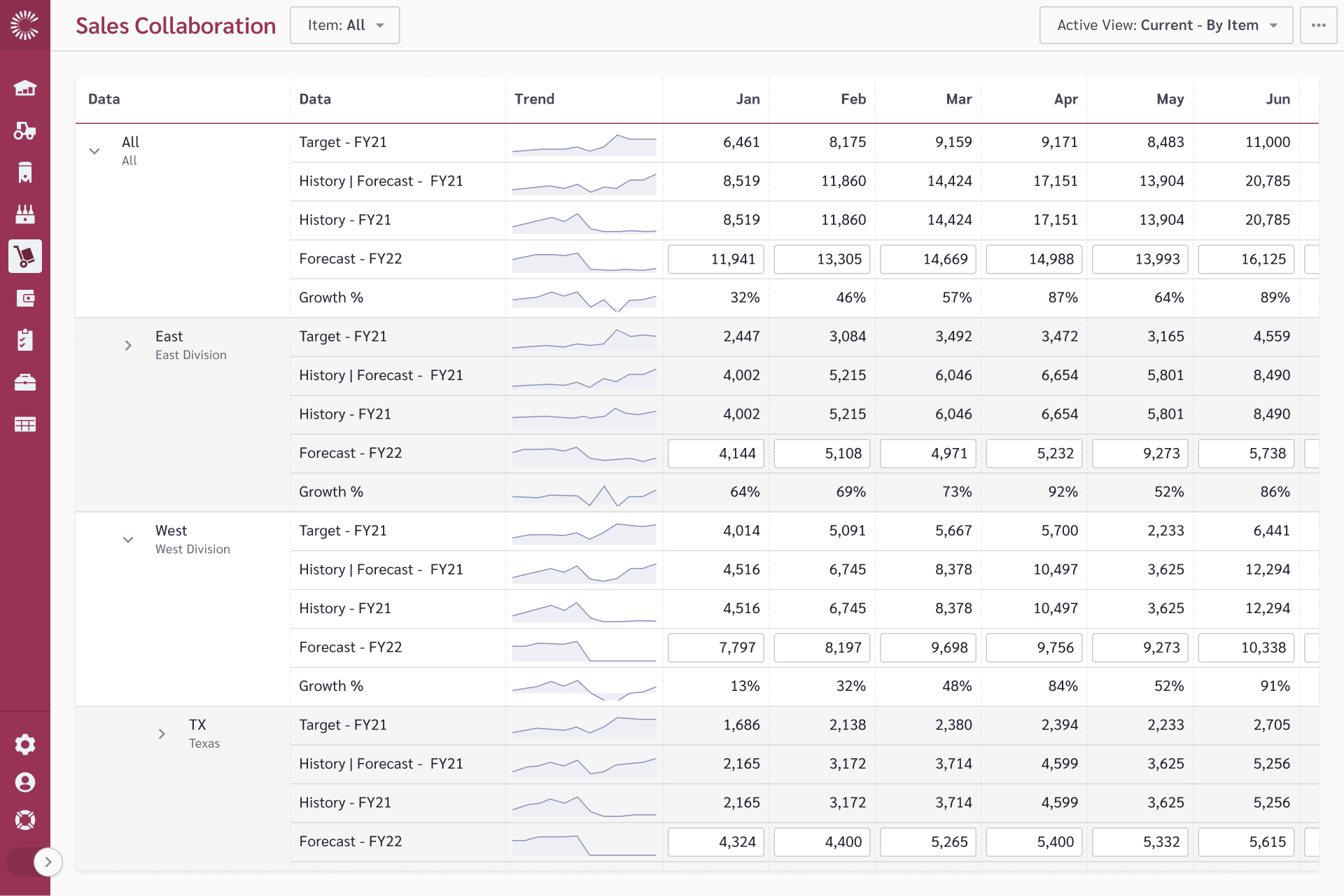
Claret's Sales Collaboration module provides a collaborative environment for building and aligning demand forecasts across products, customers, distributors, and markets.
Example workflow 1: resolving a forecast gap
One of the most important questions in demand planning is whether the latest forecast remains aligned with business expectations.
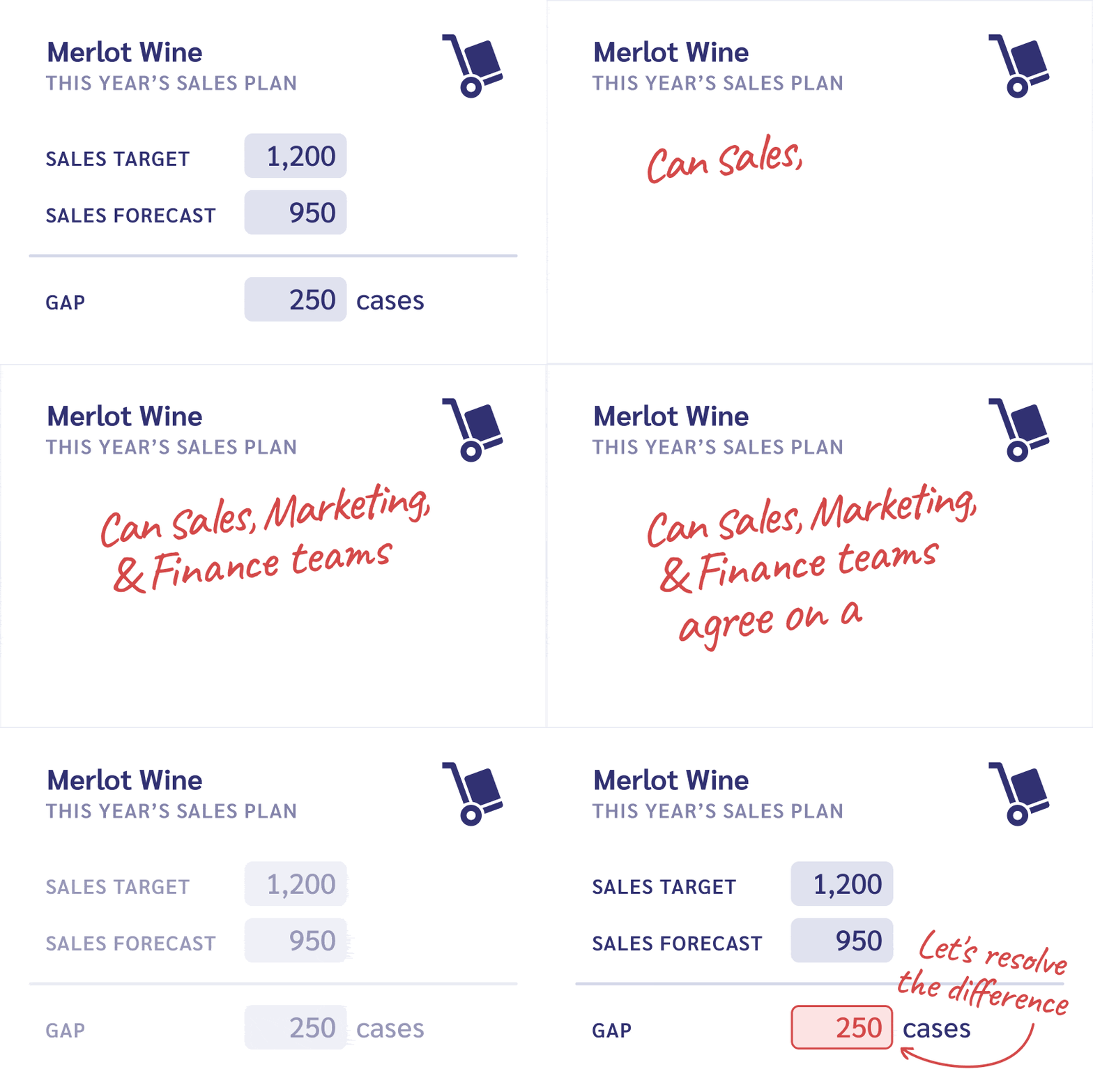
In this example, the annual sales target for Merlot is 1,200 cases while the latest sales forecast is 950 cases. The resulting gap is 250 cases, indicating that expected demand is below the organization's target.
Identifying gaps like this early creates an opportunity for discussion and action. Sales, marketing, and supply chain teams can evaluate the assumptions behind the forecast, understand the drivers of the variance, and determine whether plans need to change before those gaps affect business performance.
Comparing business targets against the latest forecast helps teams identify demand gaps early and align on a realistic plan. In this example, the sales forecast is 250 cases below target.
Example workflow 2: keeping forecasts aligned across every level
Planning doesn't always happen at the same level of detail. Some planners update the forecast for an entire brand. Others focus on individual products, regions, customers, or other planning hierarchies.
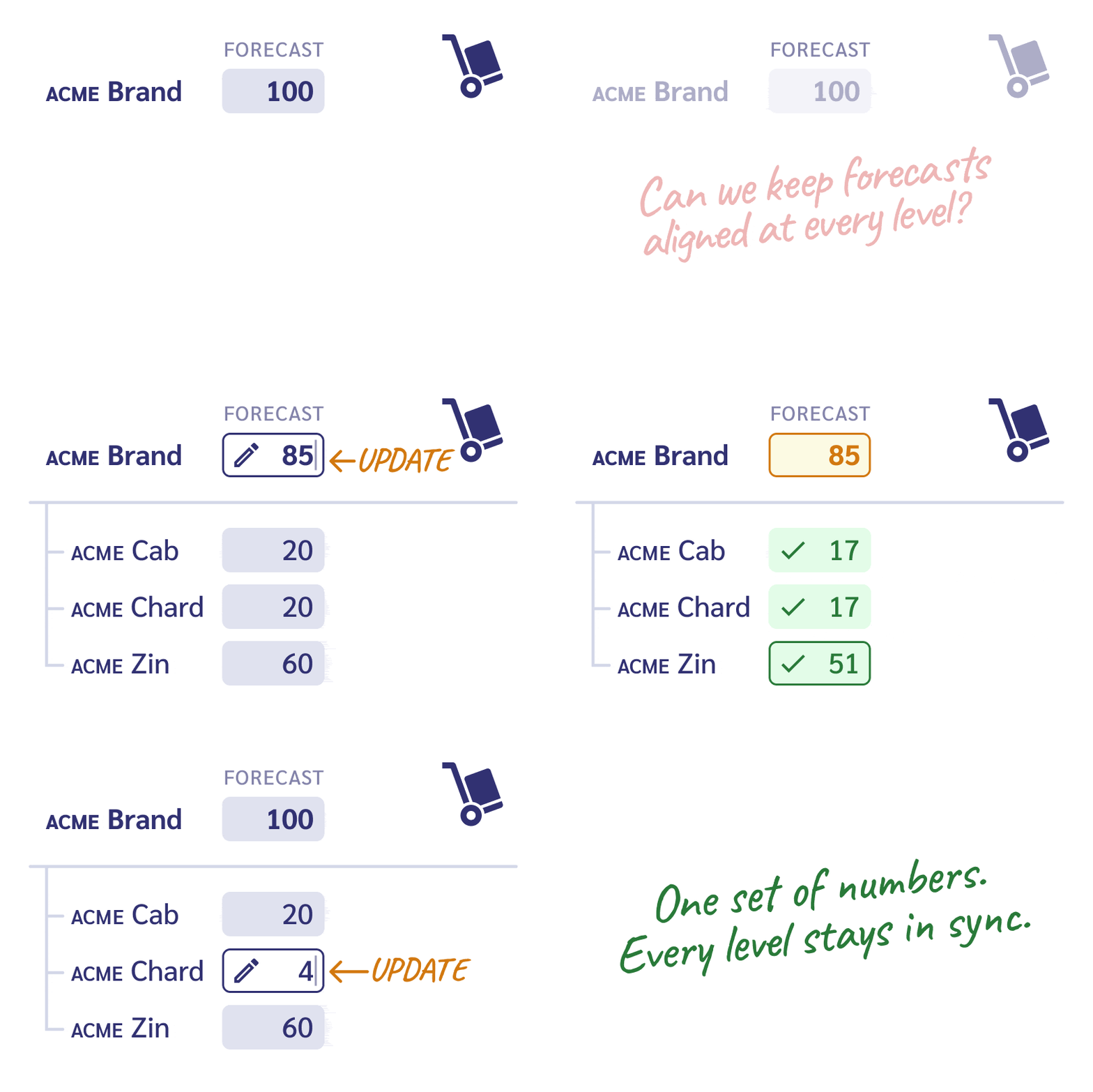
Claret lets teams view and update forecasts at whichever level makes the most sense. When a planner changes the total forecast, related forecasts are automatically reconciled. When an individual forecast changes, those updates automatically roll up to the total.
Every change is immediately reflected throughout the planning hierarchy, so sales, marketing, finance, operations, and supply chain teams are always working from the latest forecast. The result is one connected plan and one consistent set of numbers everyone can trust.
Update forecasts at any level of your planning hierarchy while Claret automatically keeps every related forecast aligned.
Pack: Turn demand into production and inventory decisions
Inventory planning is where future demand is translated into inventory targets and replenishment decisions. For beverage alcohol companies, maintaining the right inventory position is a constant balancing act. Too little inventory creates stockout risk and missed sales opportunities. Too much inventory ties up working capital, increases storage costs, and can lead to excess or aging stock.
The challenge is determining how much inventory the business actually needs. Demand changes, production schedules shift, and inventory is distributed across multiple products, locations, and time horizons. Rather than reacting to inventory issues after they occur, planners need visibility into future inventory positions before shortages and surpluses become operational problems.
Effective inventory planning connects future demand with future supply to answer a few key questions:
- How much inventory do we need?
- How much inventory will we have?
- Where are future shortages likely to occur?
- Where are future surpluses likely to occur?
The earlier these imbalances are identified, the more options teams have available to adjust production plans, inventory strategies, and supply decisions. Instead of managing inventory through hindsight, organizations can make proactive decisions that improve service levels while controlling inventory investment.
In practice:
What does inventory planning look like in Claret?
Software for planning helps provide visibility across demand, supply, production, and inventory in a single view. When these planning inputs are connected, teams can better understand how inventory levels are expected to change over time and identify potential risks before they affect customers.
Claret's Inventory Workbench provides a forward-looking view of inventory performance across products, locations, and planning horizons. Planners can evaluate projected inventory, demand, supply, and days-on-hand metrics in one workspace, helping them plan optimal production runs and understand whether future inventory positions are aligned with business objectives.

Claret’s Inventory Workbench provides a forward-looking view of inventory, demand, supply, and days-on-hand metrics, helping planners evaluate optimal production runs and identify potential risks before they impact service levels.
Example workflow: evaluating future inventory requirements
One of the most important questions in inventory planning is whether future inventory levels will be sufficient to support projected demand.
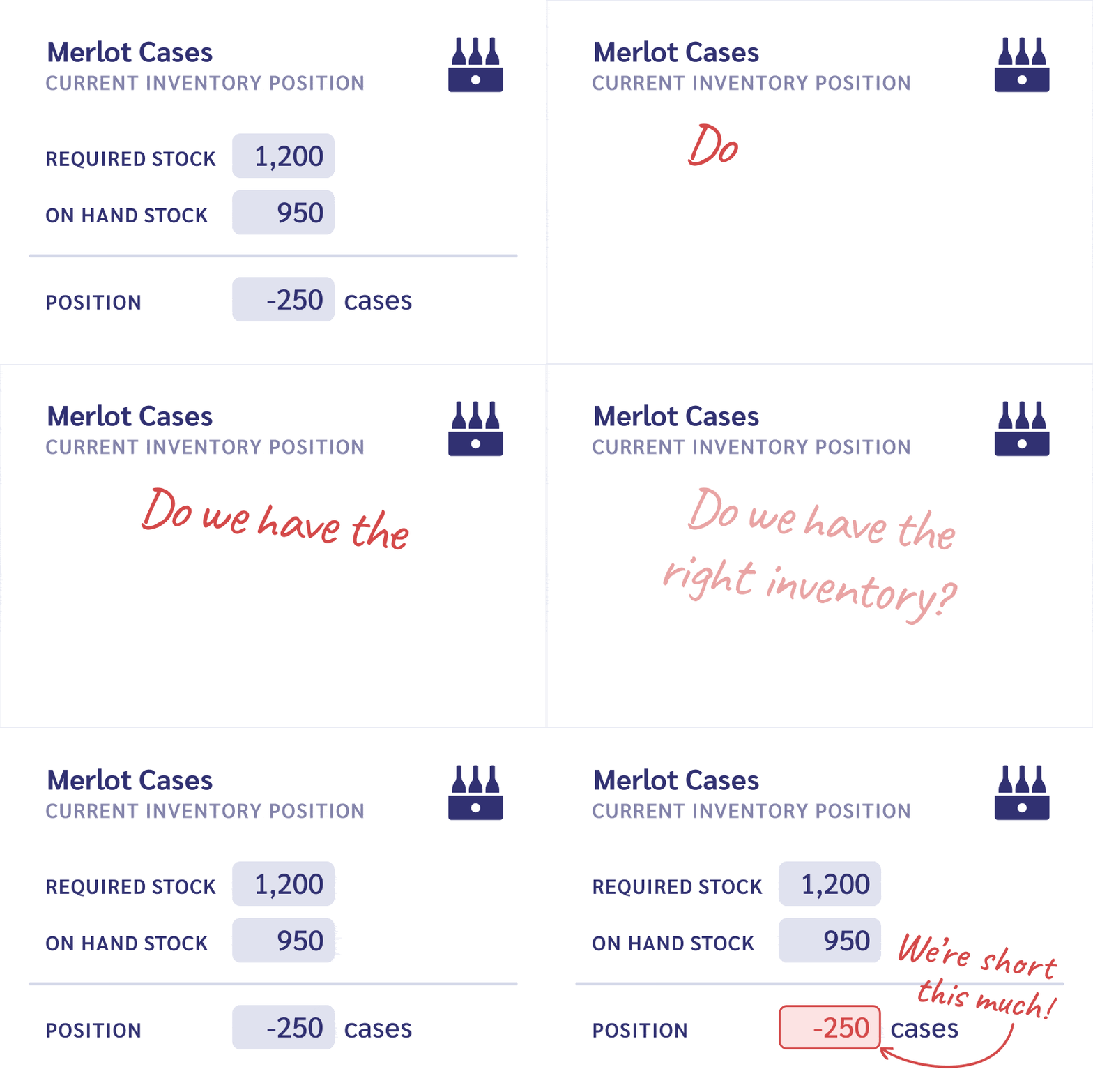
In this example, the inventory target for Merlot is 1,200 cases while projected on-hand inventory is only 950 cases. The resulting inventory position is -250 cases, indicating that available inventory falls short of the desired inventory level.
Identifying inventory gaps like this early gives planners time to adjust production schedules, rebalance inventory, revise replenishment plans, or evaluate alternative supply options before service levels are affected.
Comparing projected demand against planned production reveals future production gaps before they affect inventory availability. In this example, projected Merlot demand exceeds planned production by 250 cases.
Make: Plan future winemaking and vintage releases
Make planning is where future demand is translated into future wine availability. For beverage alcohol companies, production decisions often need to be made months or years before inventory is sold. Winemakers and planners must decide how much wine to produce, when products should be released, and how inventory should be positioned to support future demand.
The challenge is balancing supply and demand across long planning horizons. Produce too little and future demand cannot be fulfilled. Produce too much and inventory, storage costs, and working capital begin to grow. Because production decisions influence inventory availability for years to come, planners need visibility into future supply and demand before production plans are finalized.
The challenge is balancing supply and demand across long planning horizons. Produce too little and future demand cannot be fulfilled. Produce too much and inventory, storage costs, and working capital begin to grow. Because production decisions influence inventory availability for years to come, planners need visibility into future supply and demand before production plans are finalized.
Good make planning is not simply about creating a winemaking schedule. It is about understanding whether future wine supply is aligned with future demand. To do that, planners need answers to a few key questions:
- How much wine will we need?
- How much wine are we planning to produce?
- Will future demand exceed planned production?
- Are we producing more inventory than the market requires?
The earlier these imbalances are identified, the more options teams have available to adjust production volumes, release schedules, and inventory strategies. Instead of reacting to shortages and surpluses after they occur, organizations can make informed production decisions while there is still time to act.
In practice:
What does make planning look like in Claret?
Planning software can help teams compare future demand with future winemaking plans across multiple years. This makes it easier to identify potential shortages and surpluses before they affect inventory availability.
Claret’s Make Planning module provides a multi-year view of future make plans, inventory requirements, and release schedules. Planners can evaluate future production positions by product, vintage, and planning horizon, helping them understand whether future production plans will be sufficient to support projected demand.

Claret’s Make Planning module provides a multi-year view of future winemaking plans, release schedules, and inventory requirements, helping planners evaluate whether future supply will support future demand.
Example workflow: balancing supply and demand
One of the most important questions in make planning is whether planned make quantities will be sufficient to support projected demand.
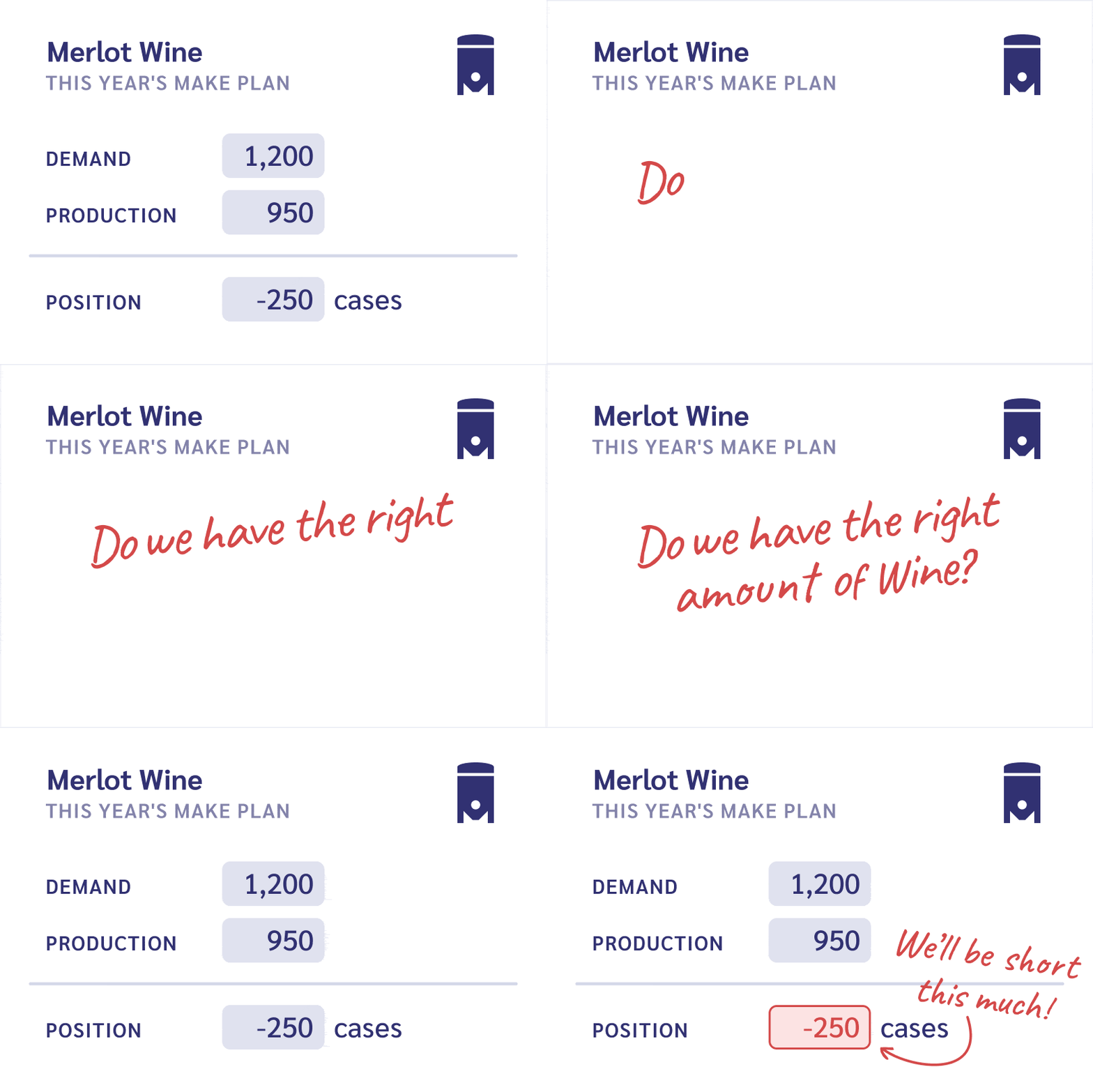
In this example, projected demand for Merlot is 1,200 cases while planned make is only 950 cases. The resulting position is -250 cases, indicating that future demand exceeds planned make.
Identifying gaps like this before production decisions are finalized gives planners time to adjust production volumes, revise release schedules, evaluate alternative supply options, or reconsider inventory strategies before the shortage affects customers.
Comparing projected demand against planned make reveals future gaps before they affect inventory availability. In this example, projected Merlot demand exceeds planned make by 250 cases.
Farm: Align crop supply with future demand
Crop supply planning is where the longest-term planning decisions in beverage alcohol are made. While demand forecasts may change next month, vineyard and sourcing decisions can influence supply years into the future. By the time a shortage appears in inventory, it is often too late to change the underlying supply plan.
Effective crop supply planning starts with demand. Organizations must understand how future demand translates into future grape requirements and compare those requirements against expected supply. The goal is to identify shortages and surpluses early enough to take action, whether that means adjusting sourcing strategies, evaluating contract purchases, or rethinking future production plans.
Good crop supply planning helps organizations:
- Understand future grape demand by varietal, vineyard, block, or region
- Identify shortages and surpluses years in advance
- Improve sourcing and purchasing decisions
- Align long-term supply with future demand
- Reduce supply risk before it affects production
Rather than reviewing crop information in isolation, planners evaluate both sides of the equation simultaneously: how much fruit will be needed, how much fruit will be available, and where potential shortages or surpluses may emerge. This allows teams to move beyond reporting and into decision-making, identifying future gaps early while there is still time to adjust sourcing, vineyard strategies, or production plans.
In practice:
What does crop supply planning look like in Claret?
Planning software can help teams compare future demand and future supply across multiple years, making it easier to identify potential imbalances before they become operational problems.
Claret’s Crop Supply Planning module provides a multi-year view of projected grape demand and available supply. Planners can analyze future crop positions by varietal, vineyard, block, region, or appellation, helping them understand where future shortages and surpluses may emerge and how those gaps could affect future production plans.

Claret’s Crop Supply Planning module provides a multi-year view of projected grape demand and available supply, helping planners evaluate future crop positions.
Example workflow: identifying a future supply gap
One of the most important questions in crop supply planning is whether future grape supply will be sufficient to support future demand.
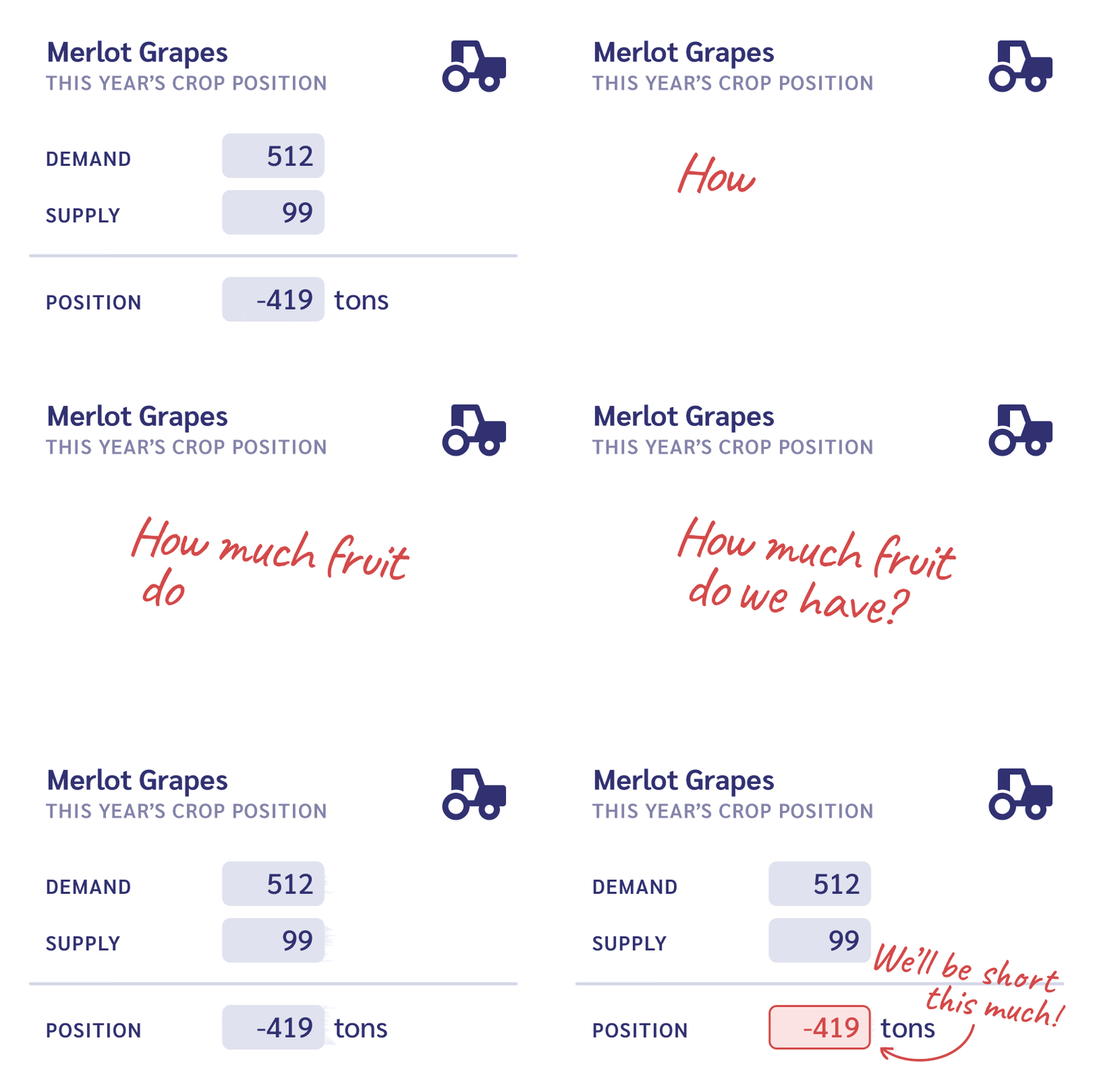
In the example below, projected demand for Merlot is 512 tons while expected supply is only 99 tons. The resulting crop position is -419 tons, indicating that future demand exceeds available supply.
Identifying shortages like this years in advance gives planners time to evaluate sourcing options, adjust vineyard strategies, revise production plans, or explore alternative supply scenarios before the shortage impacts the business.
Comparing projected demand against expected supply reveals future crop shortages before they affect production. In this example, projected Merlot demand exceeds available supply by 419 tons.
Now what?
Where to start
Throughout this guide, we’ve explored the four planning disciplines that shape beverage alcohol operations. Together, they help organizations answer some of the most important questions in planning:
Sales forecasting → What are we likely to sell?
Inventory planning → How much inventory should we hold?
Production planning → How much should we produce?
Crop supply planning → Will future supply support future demand?
Most beverage alcohol companies don’t improve all of these processes at once. They typically start with the planning challenge that will create the most immediate value and expand from there as their planning capabilities mature.
For many organizations, that starting point is sales forecasting and alignment between sales and supply teams. In fact, many Claret customers begin with Sales Collaboration before expanding into inventory, production, and crop supply planning.
The important thing is not where you start. It's recognizing that each planning decision ultimately affects the others and becomes more valuable when connected to the broader planning process.
Connected planning also depends on everyone working from the same set of numbers. When sales, inventory, production, and supply teams each maintain their own version of the plan, alignment quickly breaks down. That's exactly the challenge Claret was built to solve. By giving every team a single source of planning data, each decision builds on the last instead of working against it.
•••
We hope this information gave you valuable insights as you work toward a more optimized supply chain. If you’d like to see Claret’s Sales Collaboration module in action, or get an overview of the full platform, feel free to reach out. → Contact us
👋
Happy planning!
~The Claret team