
Last week I was at the Unified Wine & Grape Symposium in Sacramento. If you're in BevAlc and you haven't been, it's worth your time. Not for the badge scan or booth swag, but for the State of the Industry session.
I didn't actually sit in the room for it. I was in our Claret booth on the tradeshow floor talking with prospects and giving demos of our new AI Assistant. But I bought the audio for all the sessions, and the State of the Industry is the one I listened to first, like a podcast, on the drive home.
For two and a half hours, some of the sharpest minds in wine lay out exactly where we are. No spin. No wishful thinking. Just data and honest analysis.
It gave me a lot to think about. Here's what stuck with me.
The supply correction is actually happening
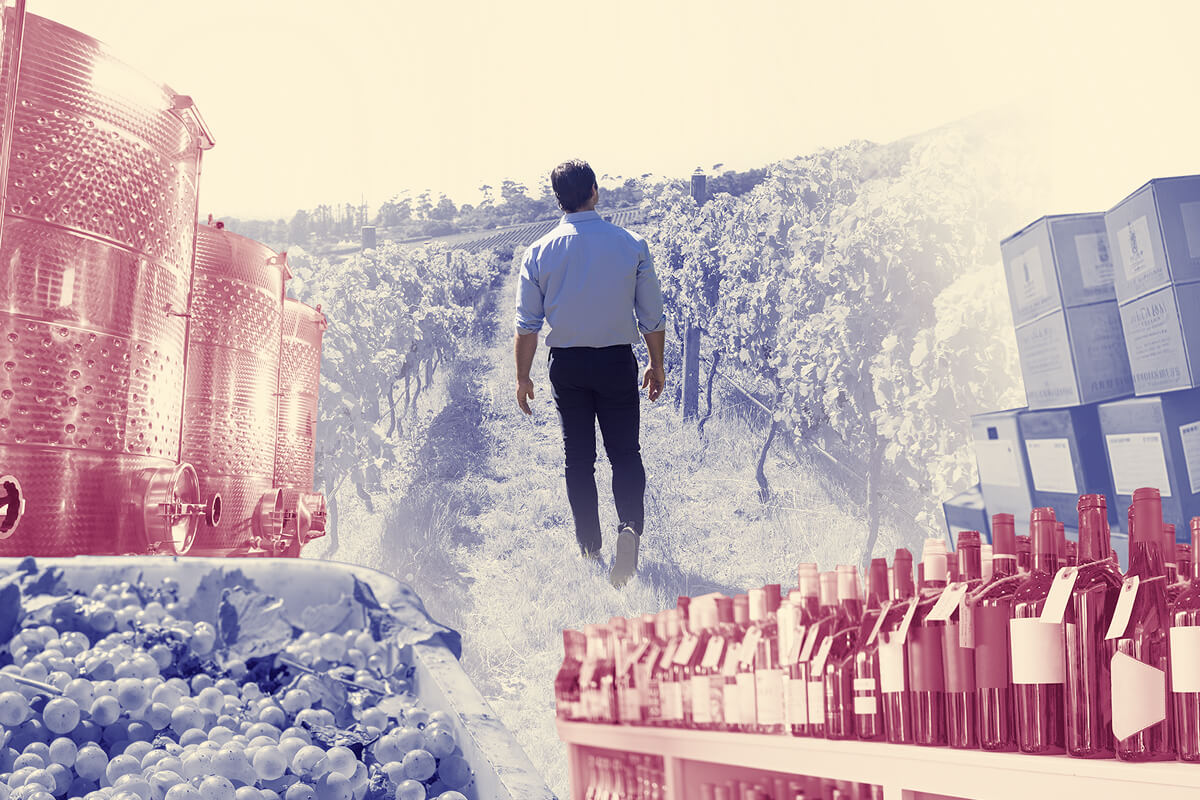
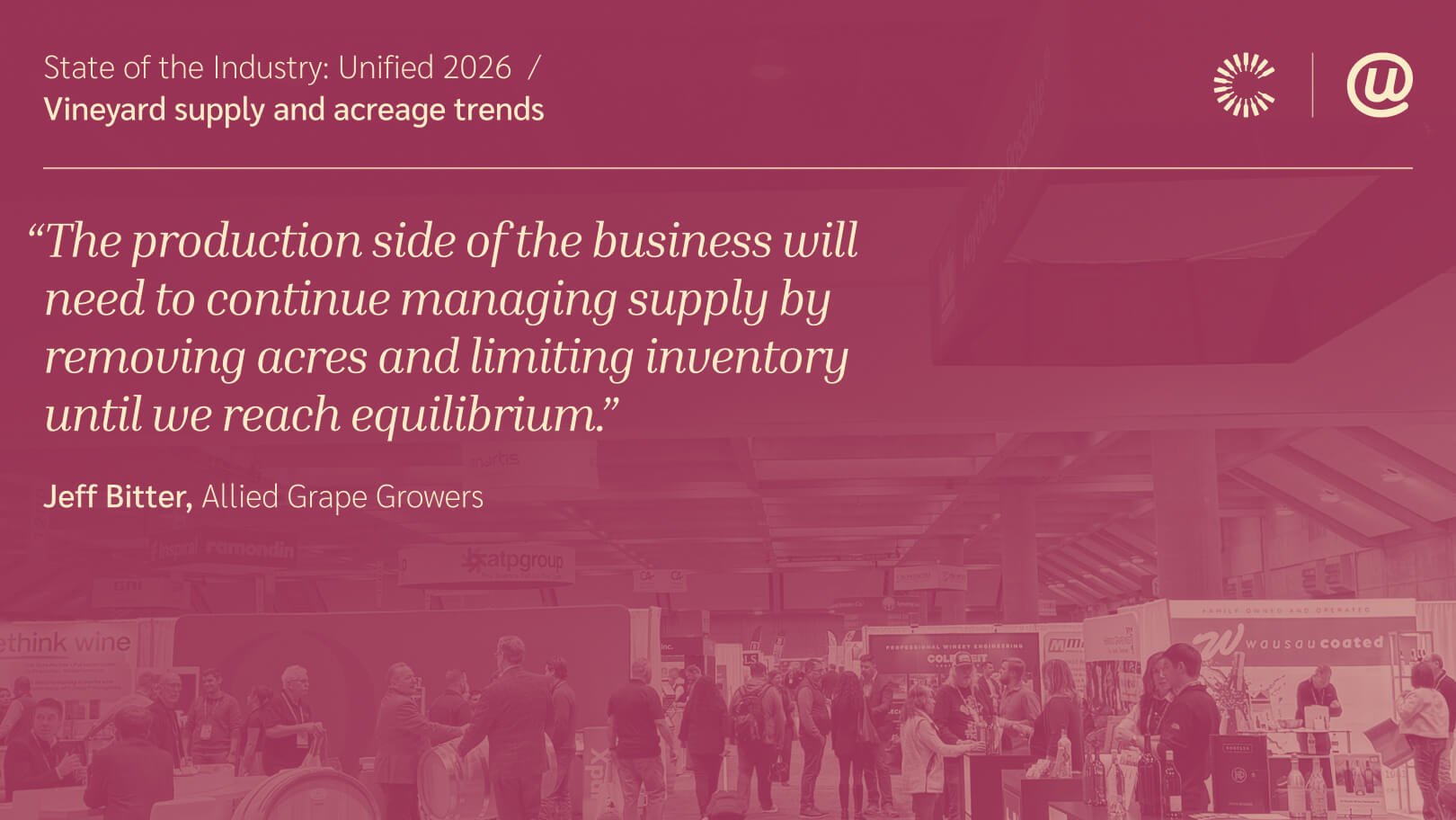
You've heard about growers pulling out vineyards. You've seen the headlines about grapes left on the vine. But here's what hit me: the math is finally starting to work.
California wine grape acreage has dropped from over 500,000 standing acres to around 477,000 bearing acres. And with another projected 40,000 acres coming out this year, we're approaching the 410,000 bearing acres the industry actually needs to match demand.
Jeff Bitter from Allied Grape Growers put it plainly. Two tiny crushes in a row have made a dent. The inventory bubble (that 20+ months of wine sitting in tanks that made everyone nervous) is down to about 19 months. Getting closer to comfortable.
Does that mean 2026 is going to be easy? No. We're probably still looking at another year where not all grapes get crushed. But the trajectory is right. The industry is correcting itself, even if it's painful.
Here's the thing about corrections: they happen whether you plan for them or not. The companies that come out ahead are the ones who see the shift coming and adjust before they're forced to.
Millennials are now the largest wine-drinking generation
This one's been coming for a while, but it's now official. According to Wine Market Council data, millennials represent 31% of wine consumers, surpassing baby boomers at 26%.
That's not surprising. What surprised me is what they're drinking and how.
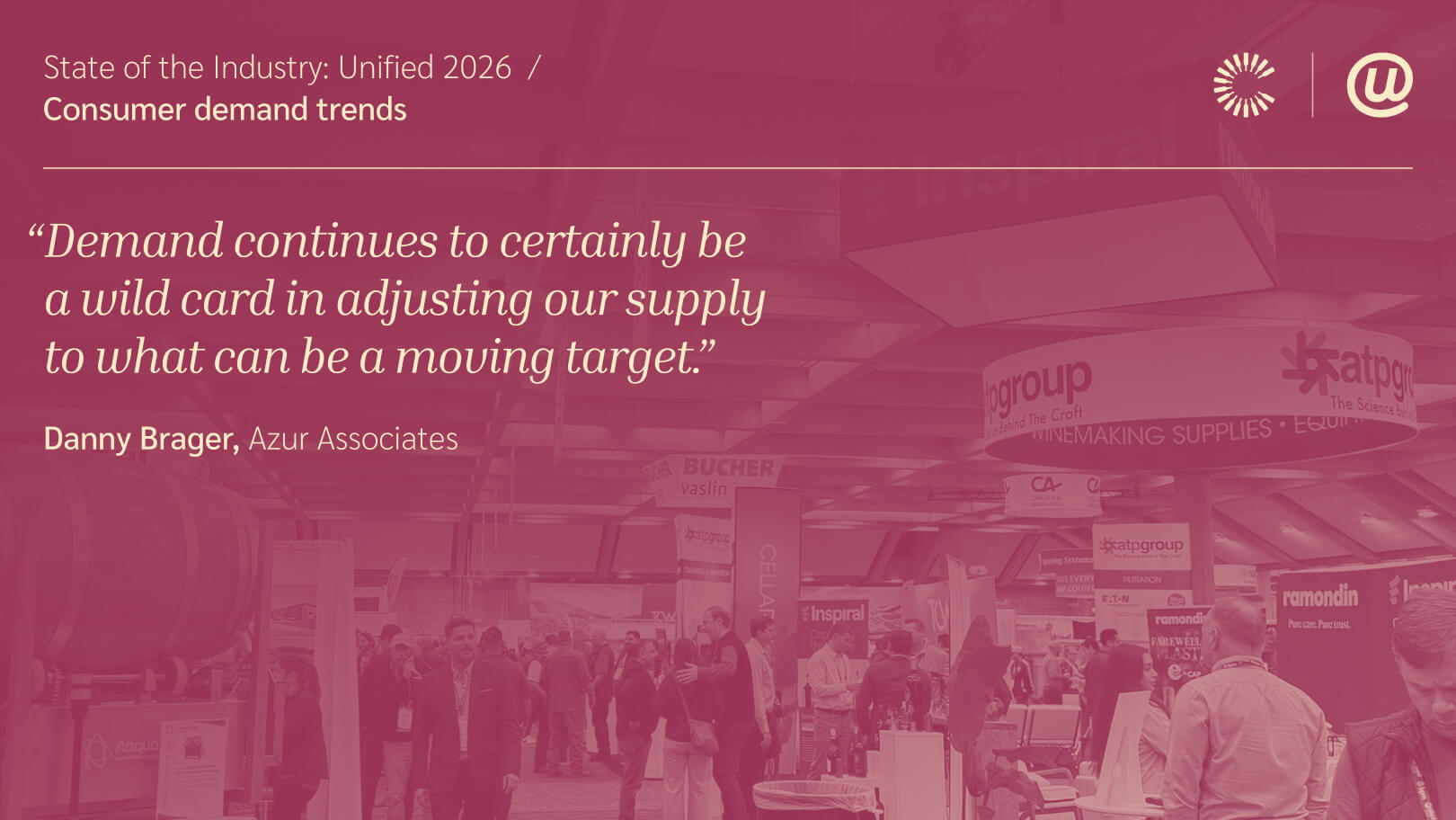
Gen Z and millennials are driving growth in white wines, white blends, sparkling, and rosé. They're more interested in Moscato and off-dry wines than Cabernet. They're buying smaller formats: half bottles, cans, single servings.
And here's the kicker: 38% of consumers now use their phones to buy wine, up from 29% just two years ago.
The playbook that worked for boomers doesn't automatically work for the next generation. They drink less frequently, but they're still drinking. They just want different things in different ways.
If your demand planning is based on "how we've always sold" you might be planning for a customer who's aging out of your market.
The sugar misconception is a real problem
Liz Thach from Wine Market Council dropped a stat that made me hit rewind: 47% of consumers believe wine is high in sugar.
Let that sink in. Almost half of potential wine drinkers think we're adding bags of white sugar to the tank.
We're not. Most table wine has zero added sugar. It's literally not legal in California. But perception is reality, and right now consumers are perceiving wine as unhealthy because of a problem that doesn't exist.
The soft drink industry figured this out years ago. Walk down that aisle and every other bottle screams "ZERO SUGAR" in giant letters. Wine? We're still debating whether to put nutrition labels on the back.
If you make wine with no added sugar, say it. Put it on the label. Put it on your website. Put it in your tasting room. The wellness-conscious consumer is growing, and they're making decisions based on what they see, or don't see.
The line that reframed everything
Steve Fredricks from Turrentine Brokerage said something that I keep coming back to:
"Wine is not difficult. The wine business is difficult."
Read that again.
Consumers don't care about our supply challenges. They don't care about bulk wine prices or acreage removals or inventory bubbles. They care about what's in their glass and how it makes them feel.
And right now? They've got access to some of the best wine ever made, from more places than ever, at more price points than ever. That's actually great news, if we can get out of our own way long enough to tell them about it.
The wine business has real problems to solve. But the product? The product is fantastic. We need to stop leading with doom and gloom and start leading with what wine actually offers: connection, celebration, a Tuesday night that feels a little more special than it should.
What this means for planning
I came away from Unified thinking about what this means for the companies we work with at Claret. A few things came into focus:
When the industry is in flux (supply correcting, demand shifting, consumer preferences evolving) you can't plan in a straight line. You need to model multiple futures and know your triggers for each one.
The companies navigating this best are the ones who can see their position clearly. Inventory levels. Demand signals. Where they're long, where they're short. If you're making decisions with outdated or fragmented data, you're planning in the dark.
The shift from boomers to millennials didn't happen overnight, but it happened. The companies that adapted their product mix, their formats, their messaging? They're the ones showing growth. The ones still debating whether to try cans? They're playing catch-up.
Cautious optimism
Here's where I land: there's reason to be optimistic, but not complacent.
The supply side is correcting. Wine is still a $100+ billion category with 76 million Americans drinking it. Millennials are moving into their peak earning years. Gen Z actually likes wine. They just drink it differently.
But optimism without action is just wishful thinking. The companies that will thrive are the ones making decisions today about where they want to be in 2027, 2028, and beyond.
Not reacting to what happened last quarter. Planning for what's coming.
That's always been the game. The rules just got a little more interesting.
Shawn Zizzo is the CEO and Founder of Claret, an integrated business planning platform built for the beverage alcohol industry. He exhibited at Unified Wine & Grape Symposium 2026 and listened to the State of the Industry session on the drive home.
Conclusion
The wine industry has real challenges ahead, but the trajectory is right. Supply is correcting, new consumers are engaged, and the product has never been better. The companies that will thrive are the ones making decisions today about where they want to be in 2027, 2028, and beyond. Not reacting to what happened last quarter. Planning for what's coming.

Frequently asked questions
What is the Unified Wine & Grape Symposium?
What is the current state of wine industry supply?
Are millennials really the largest wine-drinking generation now?
What is causing wine consumption to decline?
What are the growth opportunities in wine right now?